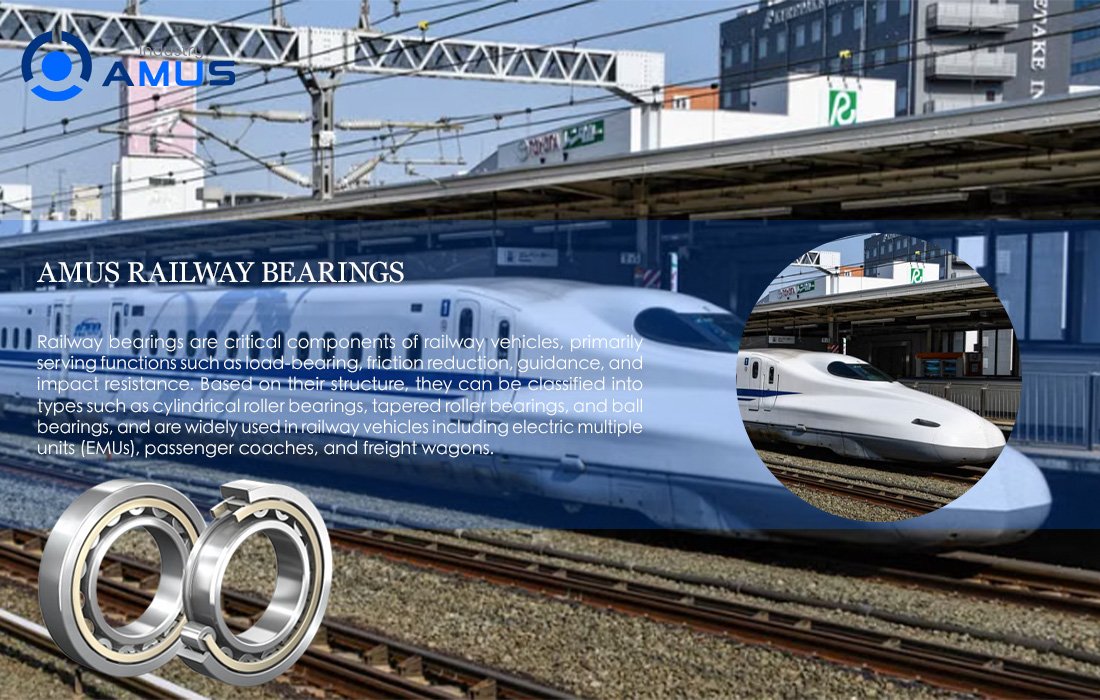
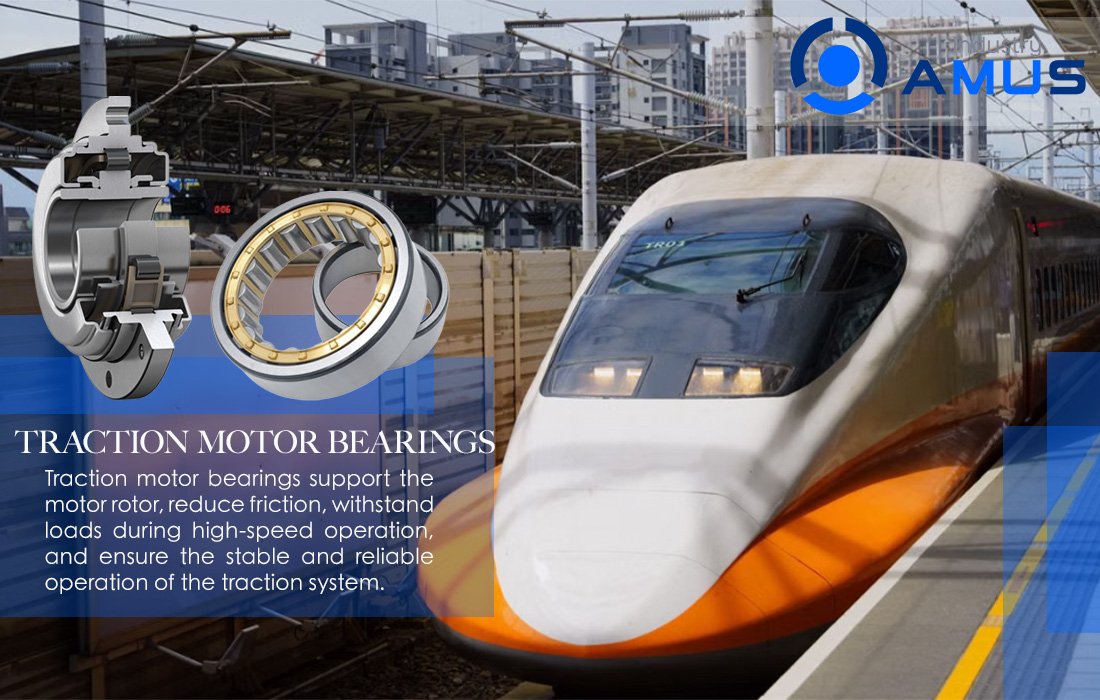
Bearings for high-speed train traction motors are critical components of the propulsion system. They primarily support the traction motor rotor, reducing rotational friction and ensuring stable motor operation.
High-speed trains operate at high velocities, and traction motors must function for extended periods. Bearings are subjected to high-speed rotation, continuous loads, and temperature fluctuations. Additionally, train startup, acceleration, and braking impose varying dynamic loads.Consequently, these bearings require excellent high-speed performance and must maintain operational stability.
Key Functions of High-Speed Train Traction Motor Bearings
Traction motor bearings primarily serve to support and position the rotor, maintaining its stable rotation. An appropriate bearing design helps control the rotor’s operating state.
Bearings also reduce rotational friction; lower friction minimizes energy loss and reduces heat generation.High-speed train traction motors frequently undergo rapid startup and acceleration. Bearings must adapt to changing rotational speeds, as superior operational performance helps the traction system maintain a stable power output.
Common Types of High-Speed Train Traction Motor Bearings
Various rolling bearings are used in high-speed train traction motors.Cylindrical roller bearings offer high radial load-carrying capacity and are suitable for high-speed rotation. They are commonly used in motor designs requiring robust radial support.
Deep-groove ball bearings feature low rotational friction and can withstand both radial and moderate axial loads. Their compact structure makes them suitable for specific traction motor applications.
Insulated bearings are designed for electric drive systems; they mitigate electrical erosion caused by shaft currents passing through the bearing. Insulation enhances the operational reliability of the motor bearings.The specific bearing type is selected based on the motor’s structure, rotational speed, and load requirements.
Performance Requirements for High-Speed Train Traction Motor Bearings
High-speed performance is a crucial metric, as high-speed rotation increases friction and temperature; bearings must maintain smooth, stable operation.Load-carrying capacity is equally important. Traction motors endure continuous loads during long-term operation, while acceleration and braking introduce load fluctuations.
Lubrication performance directly impacts bearing operation. Suitable grease reduces friction, and proper lubrication levels help control operating temperatures.Insulation performance is also a key consideration. Shaft currents can damage rolling contact surfaces. Insulated bearings help reduce the risk of electrical erosion.
Sealing performance is equally important. Effective seals minimize the ingress of dust and impurities and help maintain the properties of the lubricant.
Applications of High-Speed Train Traction Motor Bearings
Bearings for high-speed train traction motors are primarily used in high-speed electric multiple units (EMUs) and high-speed railway rolling stock.
Different vehicle models feature varying traction motor configurations, with differences in rotational speed, shaft diameter, and load. Consequently, bearings must be matched to the specific motor design.
Beyond high-speed EMUs, the associated bearing technology can also be applied to electric locomotives, urban rail vehicles, and other electrically driven railway equipment.
Key Considerations for Bearing Selection
When selecting bearings for high-speed train traction motors, it is essential to verify the bearing dimensions and mounting configuration.Load ratings and operating speeds must also be considered, as well as operating temperatures.
For electric traction systems, insulation requirements are a critical factor. Lubrication methods and sealing designs also influence bearing performance.Proper bearing selection reduces friction and temperature rise, thereby enhancing the operational stability of the traction motor.
Conclusion
Bearings for high-speed train traction motors perform functions such as rotor support, positioning, and friction reduction, playing a vital role in the train’s propulsion system.
As high-speed rail continues to evolve, traction motor bearings must adapt to higher rotational speeds and increasingly complex operating conditions.
Superior high-speed performance, load-carrying capacity, lubrication, and insulation properties help ensure the stable operation of traction motors.