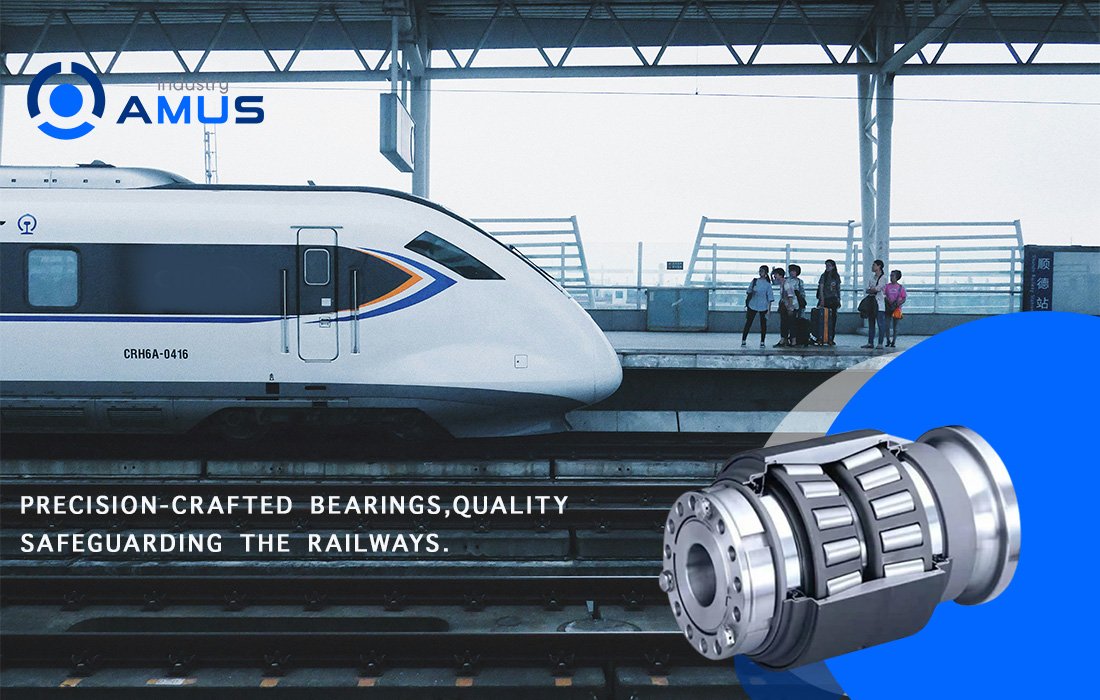
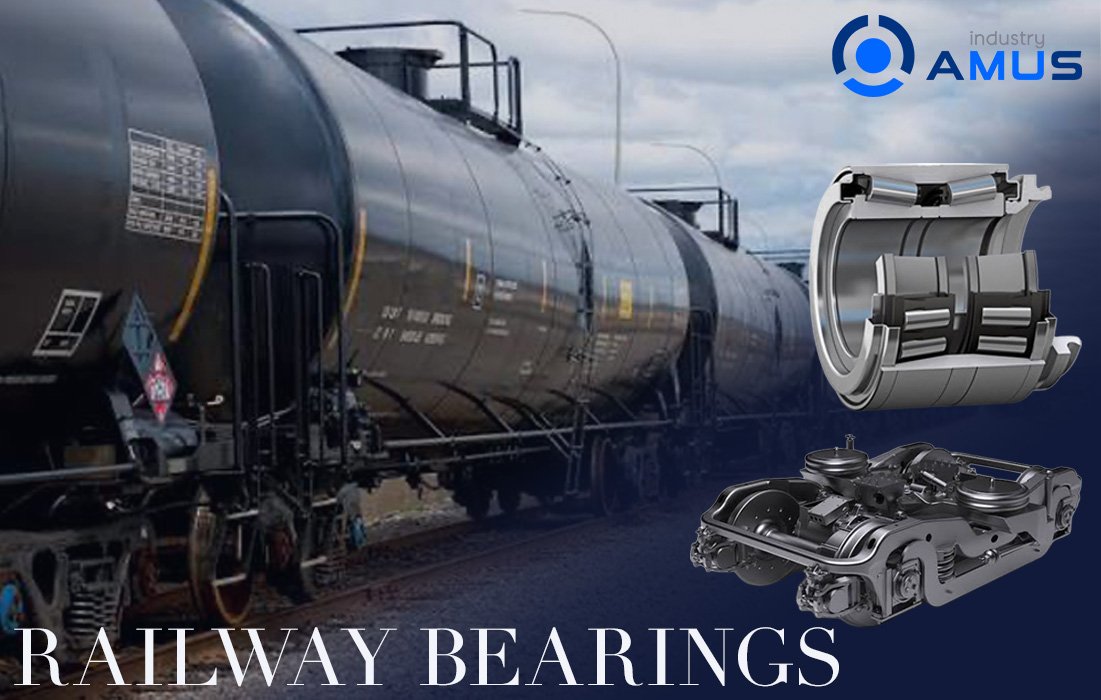
Gearbox bearings are critical components of the EMU drive system, responsible for supporting gears and rotating parts. During high-speed operation, the gearbox must continuously transmit power, requiring the bearings to withstand high rotational speeds as well as radial and axial loads.Consequently, these bearings must exhibit high precision, high reliability, and excellent durability.
Primary Functions of EMU Gearbox Bearings
EMUs transmit traction power through the gearbox, with bearings supporting the gear shafts and associated rotating components. Stable bearing operation minimizes friction and vibration.
Bearings are subjected to significant load fluctuations during train startup and acceleration, while also maintaining stable rotation during high-speed travel.Superior bearing performance ensures smooth power transmission within the gearbox and helps minimize noise and temperature rise during operation.
High Precision Meets High-Speed Operational Demands
EMUs operate at high speeds, requiring gearbox bearings to perform reliably in high-speed rotational environments.
Bearing precision directly impacts rotational stability; high dimensional accuracy ensures stable operation, while optimized internal clearance helps control temperature rise.Additionally, the bearings must offer excellent rotational flexibility. Stable operation reduces vibration and enhances the efficiency of the drive system.
Lubrication and Operational Stability
Lubrication is a vital aspect of EMU gearbox bearing performance, as proper lubrication minimizes friction generated by rolling contact.
High-speed operation increases internal heat generation; appropriate lubricants help control temperature rise and reduce wear between raceways and rolling elements.Lubrication strategies must be selected based on rotational speed, load, and operating temperature, and regular inspection of lubrication status is essential.
Sealing Performance and Contamination Control
EMUs operate in complex environments over extended periods, where dust, moisture, and temperature fluctuations can impact the gearbox system.Effective sealing structures prevent contaminants from entering the bearing, while stable sealing performance helps maintain optimal lubrication conditions.
For EMUs in long-term service, a well-designed sealing system reduces maintenance requirements and ensures the long-term operational stability of the bearings. Applications of EMU Gearbox Bearings
Bearings for EMU (Electric Multiple Unit) gearboxes are primarily used in high-speed trains and rail transit vehicles.
Different vehicle models have distinct operating parameters. Bearing selection requires consideration of rotational speed, load, bearing dimensions, and installation space.Factors such as operating temperature, lubrication conditions, and sealing methods must also be taken into account. Properly matching bearing parameters enhances gearbox operating efficiency.
How to Select EMU Gearbox Bearings?
When selecting bearings for EMU gearboxes, key factors to consider include load ratings and limiting speeds.High-precision bearings are suitable for high-speed rotation. Robust load-bearing capacity ensures the ability to handle continuous operation and fluctuating loads.
Additionally, attention should be paid to bearing materials, internal clearance, lubrication methods, and sealing structures.Proper parameter matching helps ensure stable power transmission within the EMU gearbox.
High precision supports high-speed transmission, while high reliability ensures safe train operation.Although compact in size, EMU gearbox bearings perform the critical task of power transmission. Stable bearing performance helps maintain smooth train operation and enhances the reliability of the entire transmission system.