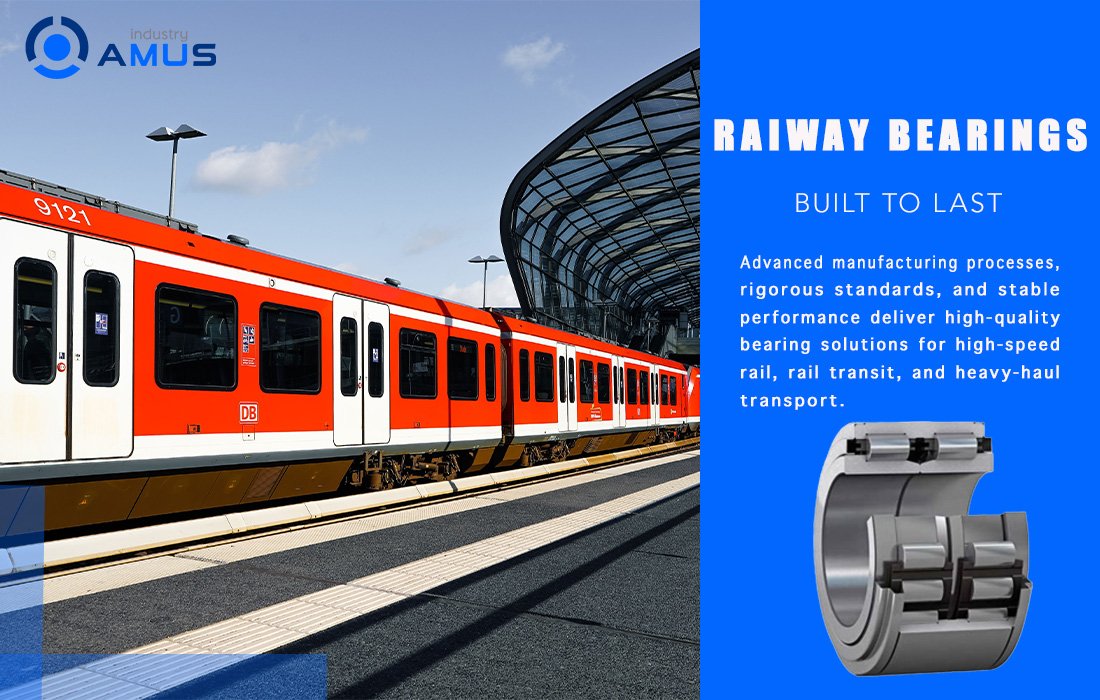
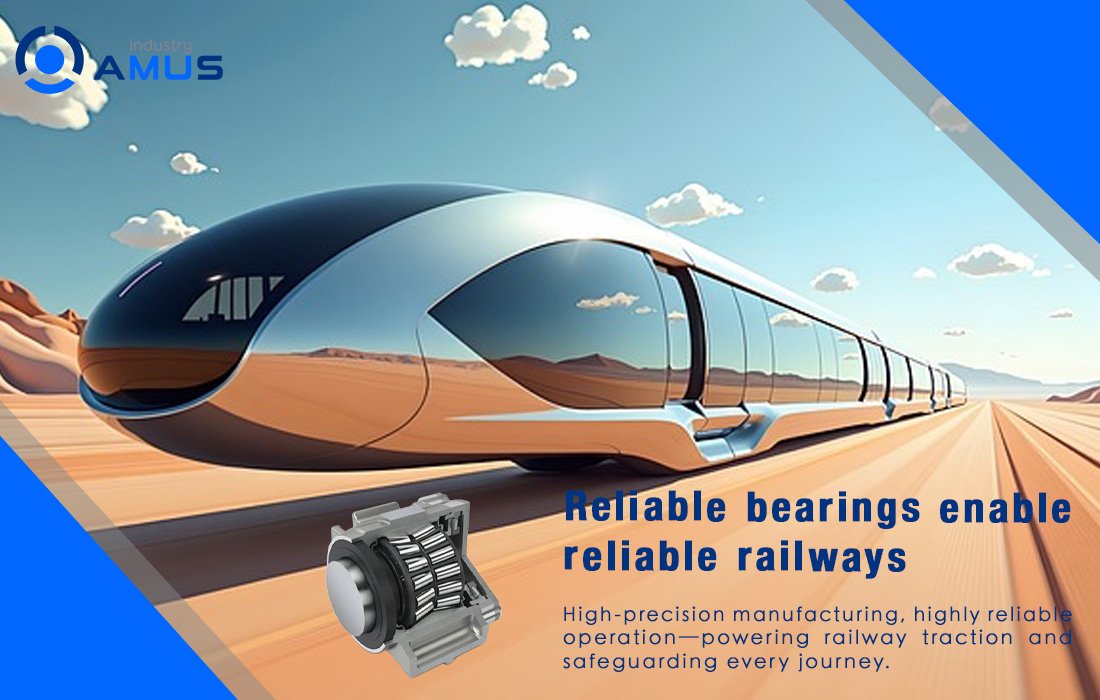
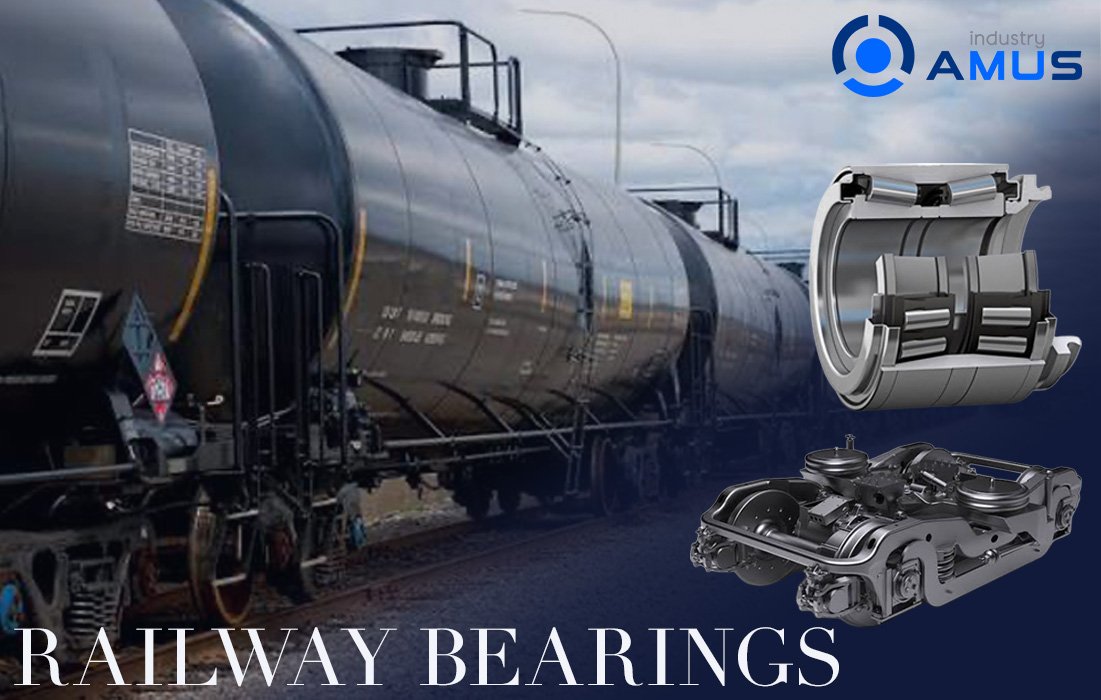
Railway gearbox bearings are critical components of rail transit drive systems. They primarily provide rotational support and facilitate load transmission within the gearbox. As the train operates, the gearbox functions continuously, subjecting the bearings to high rotational speeds, heavy loads, and significant vibration.Consequently, railway gearbox bearings must possess high precision, robust load-bearing capacity, and operational stability.
Key Functions of Railway Gearbox Bearings
The gearbox transmits the train’s driving force, while the bearings support the gears and associated rotating components. Stable bearing operation minimizes friction and vibration.
Railway vehicles experience varying loads during startup, acceleration, and braking; gearbox bearings must accommodate these fluctuations. An optimized bearing structure helps maintain stable equipment operation.
High Precision to Meet High-Speed Operational Demands
High-speed rail imposes stricter requirements on gearbox bearings. Increased train speeds result in higher bearing rotational speeds.High rotational precision reduces vibration, while a stable internal structure lowers operating noise. Additionally, an optimized internal clearance design helps maintain optimal operating conditions.
For high-speed electric multiple units (EMUs) and high-speed trains, bearings must be matched to specific rotational speeds and load conditions.
Effective Lubrication to Reduce Operational Wear
Lubrication is a crucial aspect of railway gearbox bearing performance. Proper lubrication minimizes friction between the rolling elements and the raceways.
Gearboxes often operate in complex environments where temperature, rotational speed, and load all influence lubrication conditions.
Selecting the appropriate lubrication method helps limit the rise in bearing temperature. Regular inspection of lubrication status also helps prevent abnormal wear.
Reliable Sealing to Withstand Complex Environments
Railway vehicles are exposed to rain, dust, and temperature fluctuations, necessitating effective protection for gearbox bearings.An optimized seal design prevents external contaminants from entering the bearing while helping to maintain lubrication integrity.
For railway vehicles in long-term service, sealing performance directly impacts the operational stability of the bearings.
Applications of Railway Gearbox Bearings
Railway gearbox bearings are used in a wide range of rail transit equipment, including high-speed trains, electric multiple units (EMUs), metro vehicles, intercity trains, and railway locomotives.
Different vehicles operate under varying conditions. Bearing selection requires consideration of rotational speed, load, temperature, and installation space.
Properly matching bearing models helps ensure stable power transmission within the gearbox. Reliable operational performance also enhances the overall reliability of railway vehicles.
How do you select bearings for railway gearboxes?
When selecting bearings for railway gearboxes, key factors include bearing type, dimensional accuracy, load ratings, and limiting speeds.Lubrication methods, sealing configurations, and operating temperatures must also be taken into account.
For high-speed rail applications, particular attention should be paid to vibration, noise, and high-speed operational performance.Precision support for gear drives, ensuring stable load-bearing for railway propulsion.Although compact in size, railway gearbox bearings play a critical role in providing rotational support. Appropriate bearing design and proper maintenance contribute to more stable and efficient railway vehicle operation.