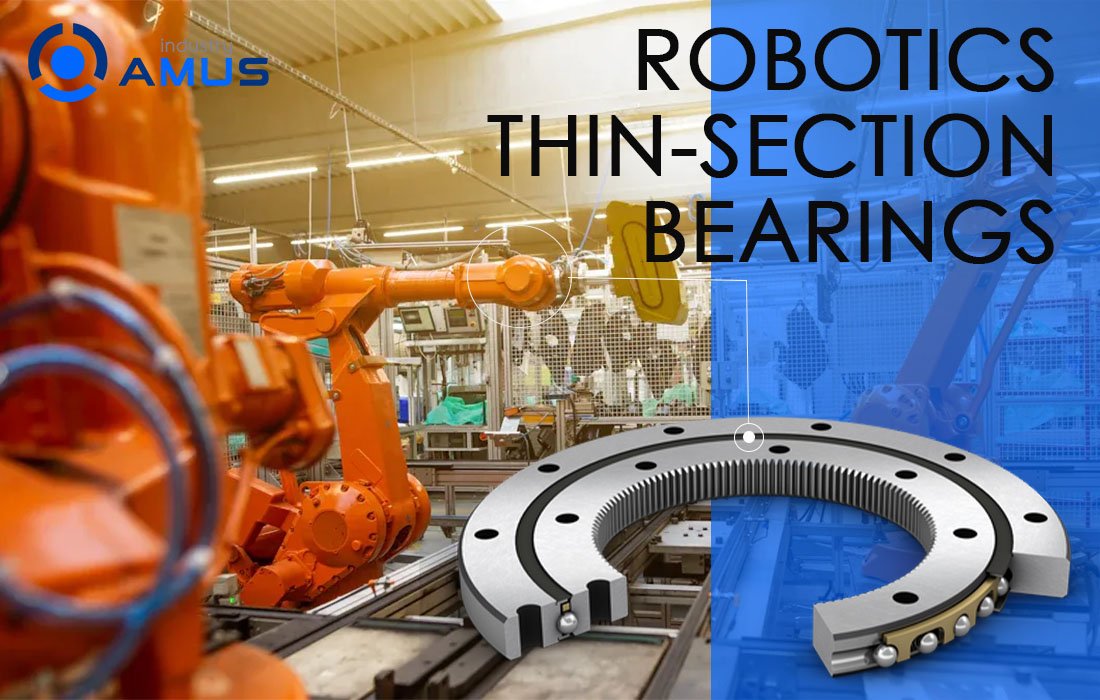
Thin-walled roller bearings for robotic arms are critical components in robot joints and precision rotary mechanisms. As industrial robots, collaborative robots, and automation equipment continue to evolve, there is an increasing demand for robotic arms that are lightweight, compact, and highly precise. Thanks to their compact structure and excellent load-bearing capabilities, thin-walled roller bearings help optimize internal space and ensure stable rotational movement.
I. What are thin-walled roller bearings for robotic arms?
These bearings feature a thin-ring design and transmit loads via rolling elements. Compared to traditional thick-walled bearings, they reduce structural space requirements and the weight of rotating parts while still meeting installation dimension specifications.
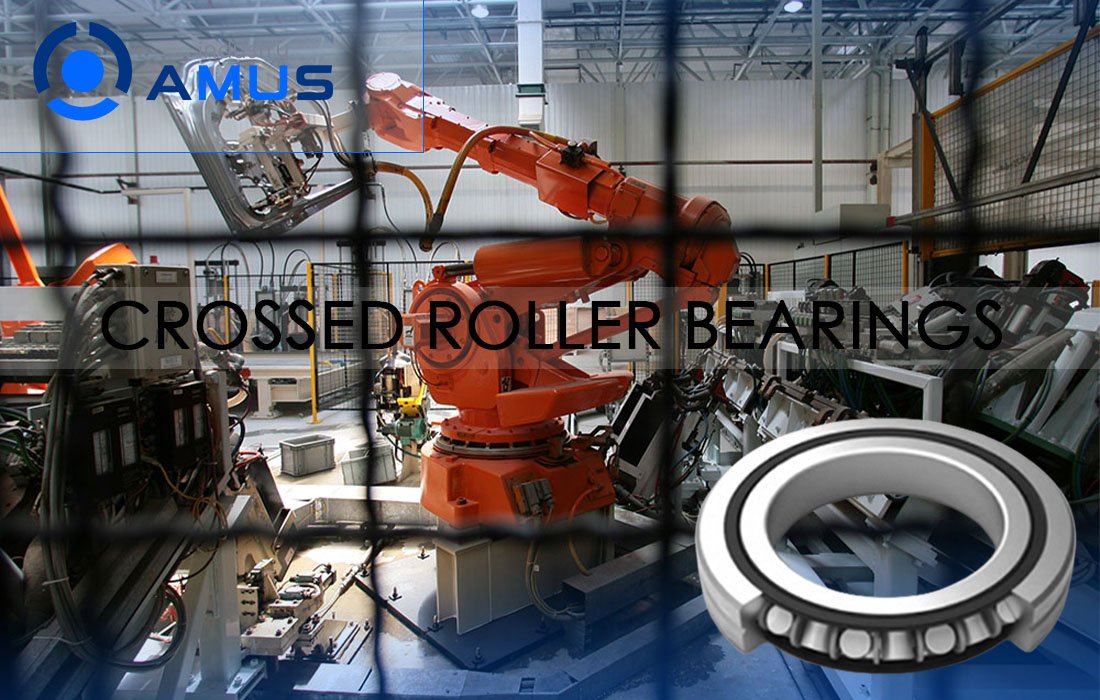
Depending on the specific configuration, thin-walled roller bearings may utilize cylindrical rollers or other types of rolling elements. Different designs vary in terms of radial and axial load capacity, rotational precision, and mounting methods. Consequently, designers must select the appropriate type based on the robotic arm’s joint structure and operating conditions.
II. Applications of thin-walled roller bearings in robotic arms
Robotic arms typically comprise shoulder, elbow, and wrist joints, as well as end-effector rotation mechanisms. Since installation space, load conditions, and movement requirements differ across these sections, the demands placed on bearing structures vary accordingly.
First, wrist joints often require a compact internal layout. Thin-walled roller bearings minimize the space occupied by the bearing assembly, thereby freeing up more room for motors, speed reducers, and transmission components.
Second, lightweight robotic arms require control over the overall weight of joint assemblies. By carefully selecting the size and structure of thin-walled bearings, designers can optimize the mass distribution of rotating parts, helping to reduce the robotic arm’s moment of inertia.
Additionally, precision rotary platforms and automated positioning mechanisms can utilize specific thin-walled roller bearings—tailored to load and accuracy requirements—to provide rotational support in space-constrained environments.
III. Key Advantages of Thin-Walled Roller Bearings for Robotic Arms
1. Compact structure for optimized spatial layout
The thin-walled design reduces the radial dimensions or weight of the bearing assembly, enabling designers to optimize the internal layout of the robotic arm. This structure is particularly valuable for joint modules where space is limited.
2. Rolling support for improved operational performance
Rollers transmit loads through rolling contact. Proper bearing design, lubrication methods, and installation fits help minimize operational resistance, supporting the robotic arm in performing actions such as continuous rotation, frequent start-stop cycles, and repetitive positioning.
3. Suitability for precision mechanical structures
Robotic arms require the coordination of multiple joints to execute complex movements. Selecting appropriate bearing precision, internal clearance, and preload parameters enhances rotational stability and ensures the equipment meets positioning requirements.
4. Support for lightweight design
The thin-walled structure offers design flexibility for reducing the weight of the robotic arm. However, the actual weight reduction depends on factors such as bearing dimensions, materials, rolling element configuration, and the overall joint structure; designers must evaluate these comprehensively.
IV. How to Select Thin-Walled Roller Bearings for Robotic Arms?
When selecting a bearing, first confirm the inner diameter, outer diameter, width, and available installation space. Accurate dimensional parameters ensure proper matching with the joint housing, rotating shaft, and transmission components.
Next, analyze radial loads, axial loads, and overturning moments. For robotic arms with long reaches, end-effector loads and moment arm lengths affect the forces acting on the joint; therefore, designers should calculate the bearing’s load-carrying capacity based on actual operating conditions.
Additionally, consider rotational speed, start-stop frequency, positioning accuracy, and expected service life. High-frequency operation requires attention to lubrication, temperature rise, and fatigue life, while high-precision applications necessitate a focus on bearing precision grades, fit tolerances, and the machining quality of mounting surfaces.
Furthermore, thin-walled bearings are sensitive to mounting structures and load distribution. Designers should control the flatness of mounting surfaces, strategically arrange fastening points, and apply bolt tightening forces evenly according to technical specifications to prevent ring deformation from compromising rotational performance. V. Maintenance Methods for Thin-Walled Roller Bearings in Robotic Arms
Proper maintenance helps ensure the stable operation of robotic arms. Routine inspections should focus on abnormal noise, temperature rise, rotational resistance, and lubrication status, with maintenance schedules established based on the equipment’s operating frequency.
Additionally, operators should avoid subjecting the bearings to impact loads during installation and select lubrication methods appropriate for the bearing structure and usage requirements. For robotic arms subject to frequent start-stop cycles, impact loads, or prolonged continuous operation, installation connections and operating conditions should be inspected regularly to address any anomalies promptly.
VI. Conclusion
Thin-walled roller bearings for robotic arms offer diverse support solutions for compact joint designs and precision rotary mechanisms. By carefully selecting bearing structures, dimensions, load-bearing capacities, and installation methods, designers can effectively balance lightweight construction, rigidity, and operational precision, thereby providing reliable technical support for robotic automation applications.