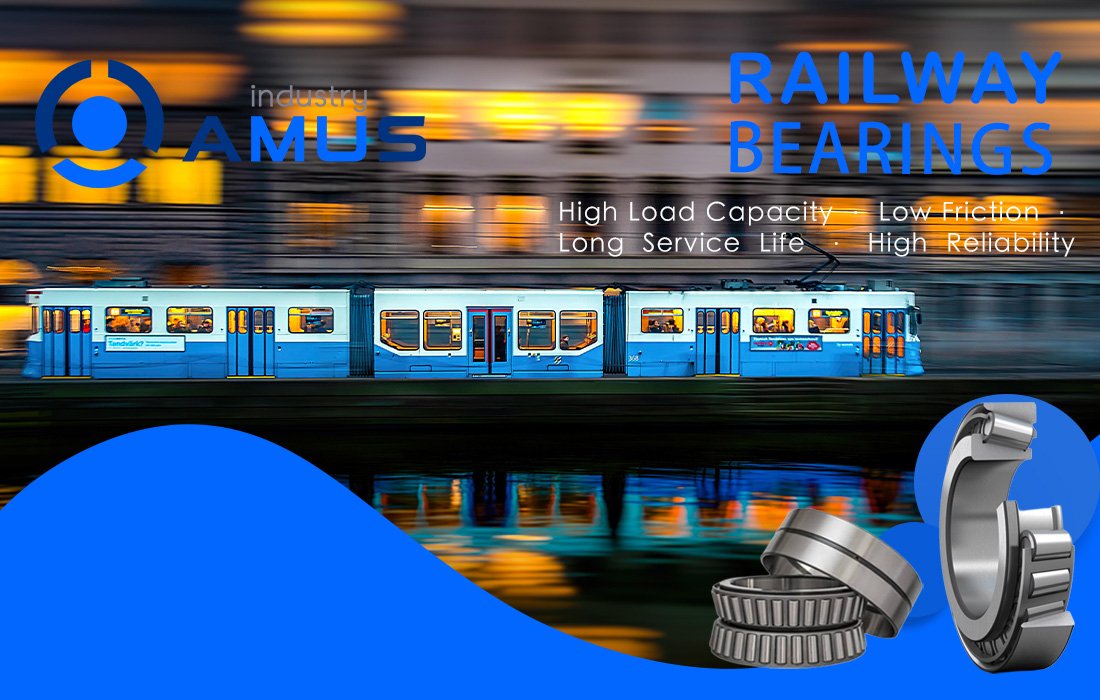
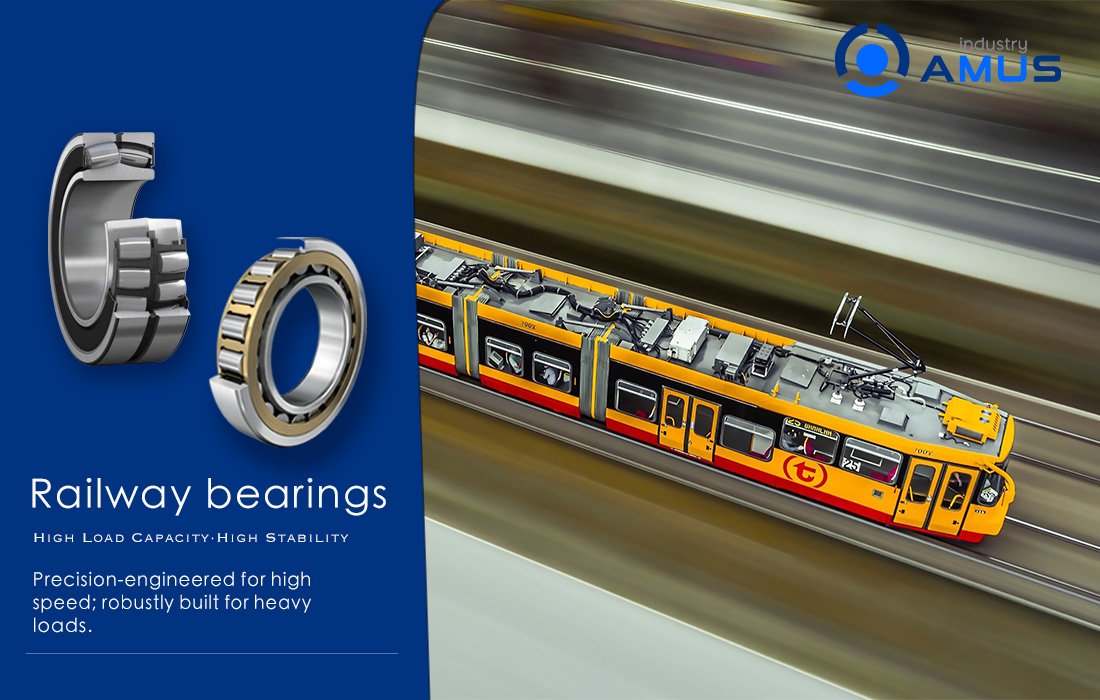
Railway transport is continuously evolving towards higher speeds. As train speeds increase, railway bearings must withstand higher rotational speeds, loads, and operating temperatures. The high-speed performance of bearings directly impacts the operational stability of the wheel-axle system and influences the train’s ride smoothness and service life.
Requirements for Railway Bearings in High-Speed Operation
During high-speed train operation, bearings undergo continuous high-speed rotation. Increased rotational speeds generate more frictional heat within the bearing. Elevated temperatures can affect lubrication conditions and increase the risk of wear.
High-performance railway bearings must maintain excellent rotational precision. Precise dimensions and a stable internal structure help reduce vibration during operation. Additionally, bearings require effective lubrication to ensure smoother high-speed rotation.
High-speed railway bearings also need robust load-bearing capacity. Bearings are subjected to loads from various directions during starting, acceleration, deceleration, and cornering. Stable load-bearing capacity helps ensure the smooth operation of the wheel-axle assembly.
Low Friction Enhances High-Speed Performance
Friction is a critical factor affecting the high-speed performance of railway bearings. Lower friction reduces energy loss and minimizes heat generation during operation.
Railway bearings typically require a combination of precision rolling elements, optimized internal clearances, and suitable lubrication schemes. Effective integration of these elements minimizes friction and maintains stable rotation.
In high-speed operating environments, bearings must maintain low-friction performance over extended periods. Stable rotation reduces abnormal vibrations, resulting in a smoother ride.
Controlling Temperature Rise Is Equally Important
High-speed rotation leads to significant temperature increases. Railway bearings must exhibit excellent heat dissipation and lubrication characteristics to accommodate prolonged operation.
Temperature fluctuations also affect internal bearing clearances. Proper clearance design allows bearings to adapt to thermal changes during high-speed operation, thereby reducing abnormal friction and operational noise.
Therefore, the design of high-speed railway bearings requires a holistic approach that considers rotational speed alongside temperature, lubrication, load, and operating duration.
Stability Impacts the Train Riding Experience
Railway bearings occupy a crucial position within the wheel-axle system. The operational state of the bearings influences wheelset rotation and the overall running condition of the vehicle.
High-precision railway bearings help minimize vibration during rotation. Stable operational performance helps maintain the train’s stability, making it particularly suitable for applications such as high-speed railways, electric multiple units (EMUs), and other rail transit vehicles.
In high-speed environments, bearings must maintain consistent performance. Excellent high-speed adaptability supports long-distance train operations while minimizing abnormal vibration and noise.
Suitable for various high-speed railway scenarios
High-speed railway bearings are used in high-speed trains, EMUs, passenger coaches, and other rail transit vehicles. Since different vehicles operate under varying speeds, loads, and conditions, bearings must be matched to the specific application environment.
For high-speed operations, key factors include rotational precision, load-carrying capacity, friction levels, temperature rise control, and durability.
The high-speed performance of railway bearings is defined not only by higher rotational speeds but also by stability during prolonged operation. High precision, low friction, high load capacity, and excellent temperature adaptability collectively enhance the bearing’s high-speed operational capabilities.
As rail transport evolves toward higher speeds and longer distances, high-speed railway bearings must continuously meet increasingly rigorous operational demands. From the wheel-axle system to overall vehicle operation, stable bearing performance provides reliable, continuous support for high-speed trains.