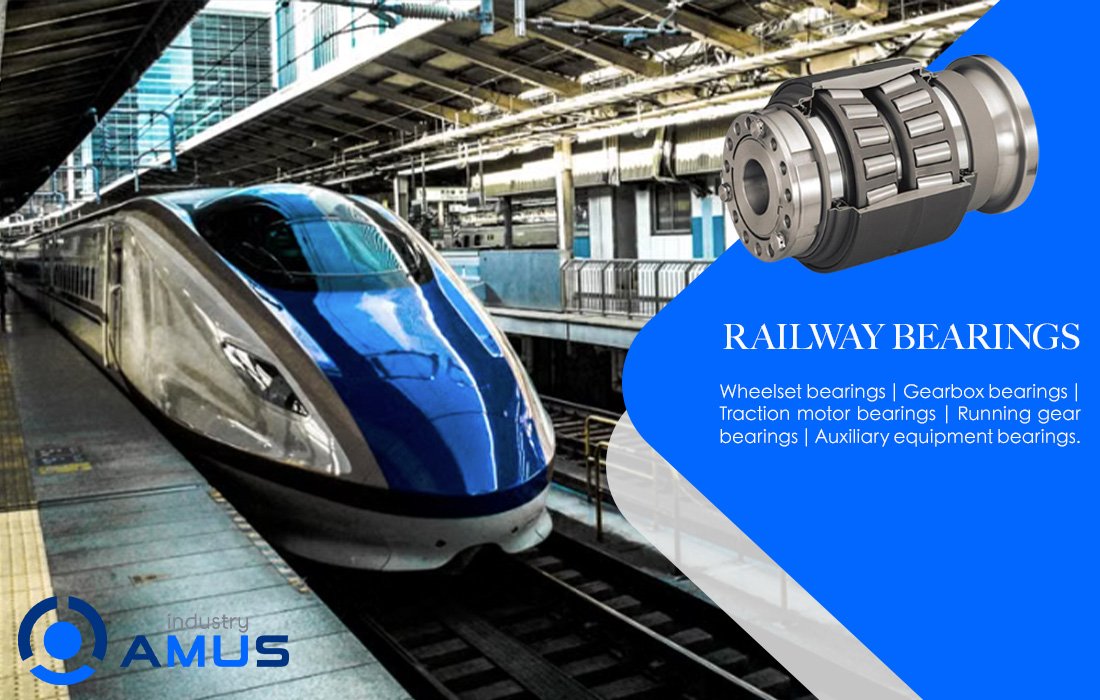
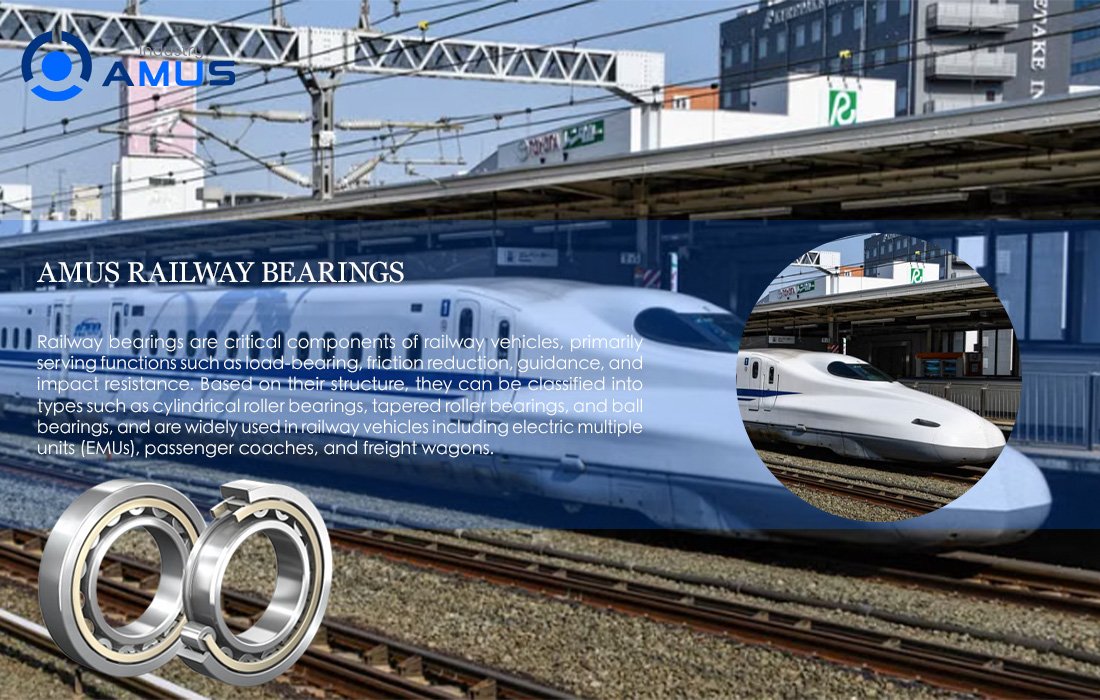
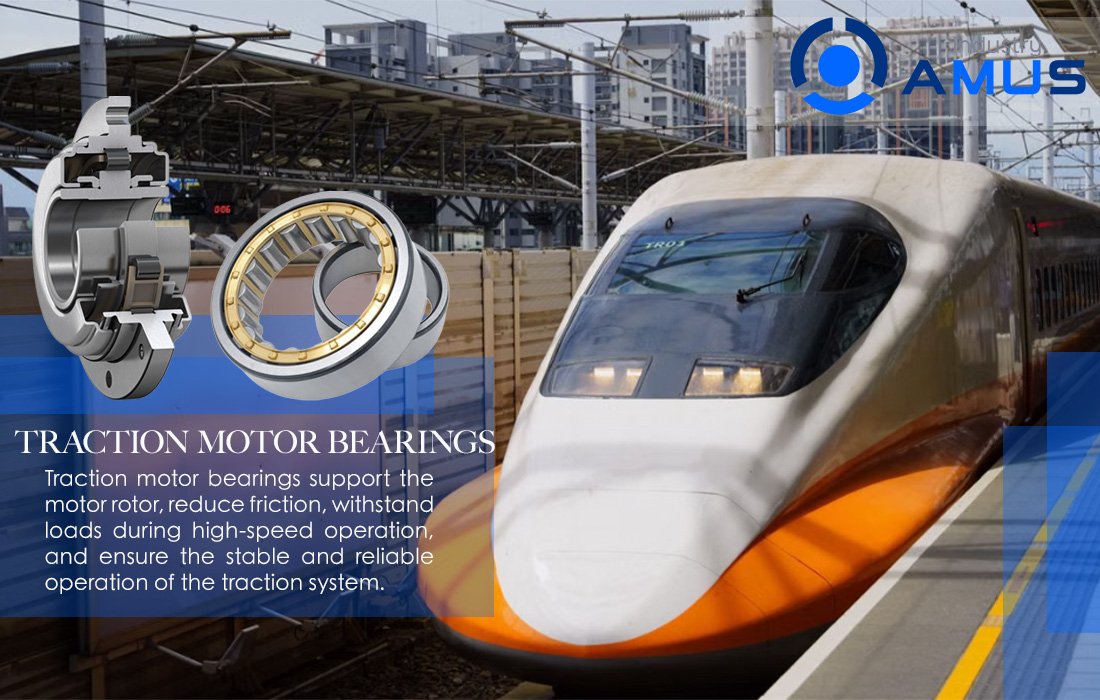
High-speed trains require high-performance bearings to support their operation. These bearings operate at high speeds for extended periods and must withstand the weight of the vehicle, track impacts, and complex vibrations. Therefore, high-speed trains place high demands on the precision, load-bearing capacity, temperature rise, and reliability of their bearings.
Currently, high-speed trains primarily use rolling bearings such as cylindrical roller bearings and tapered roller bearings. Different train models and bogie structures require different bearing solutions. The bearing type, size, and internal structure must be determined in conjunction with the vehicle design.
Why do high-speed trains use rolling bearings?
Rolling bearings transmit loads through rolling elements, reducing friction between the shaft and the bearing. They offer good high-speed performance and meet the long-term operational requirements of railway vehicles.
High-speed trains travel long distances daily. Bearings need to maintain a stable rotational state. Lower friction helps reduce temperature rise and energy loss, while also minimizing internal bearing wear.
High-speed railways also place high demands on bearing operating noise and vibration. Therefore, manufacturers need to strictly control the dimensional accuracy, rotational accuracy, and internal clearance of the bearings.
Cylindrical Roller Bearings
Cylindrical roller bearings are one of the most common types of bearings used in high-speed railways. They possess strong radial load-carrying capacity and excellent high-speed performance.These bearings are typically used in critical components such as axle boxes in railway vehicles. Their structure can be optimized according to vehicle load and operating speed.
High-speed trains operate at high speeds. Bearings need to control operating temperature rise and maintain good lubrication. High-quality cylindrical roller bearings can meet the requirements of long-term high-speed operation.
Tapered Roller Bearings
Tapered roller bearings are also suitable for some railway vehicles. They can simultaneously withstand radial and axial loads.Railway vehicles generate loads in different directions during operation. Tapered roller bearings can adapt to more complex stress conditions.
Different train models have different requirements for bearing structures. Therefore, engineers need to select appropriate tapered roller bearings based on axle load, speed, installation method, and operating environment.
What are the characteristics of high-speed train bearings?
High-speed railway bearings need to possess characteristics such as high precision, low friction, low temperature rise, and long service life. The bearings also need to withstand continuous vibration and certain impact loads.
A good sealing structure is also crucial. It reduces the entry of dust, moisture, and other contaminants into the bearing. A stable lubrication system helps the bearing maintain normal operation.
Furthermore, high-speed train bearings require rigorous quality testing. Manufacturers need to control materials, heat treatment, machining precision, and assembly quality.
How to Choose High-Speed Railway Bearings?
When selecting high-speed railway bearings, the train’s maximum operating speed, axle load, and axle box structure must be considered. Operating temperature, lubrication method, and operating environment also need to be taken into account.
Buyers should also pay attention to the bearing’s precision grade, internal clearance, rated load, and design life. Different parameters need to be matched.
Professional high-speed railway bearing manufacturers can provide product recommendations based on vehicle parameters. For overseas buyers, choosing a railway bearing supplier with experience in railway bearing production is also very important.
Conclusion
High-speed trains primarily use cylindrical roller bearings and tapered roller bearings. The specific type needs to be determined based on the vehicle structure and operating conditions.
High-quality high-speed railway bearings need to balance high-speed performance, load capacity, precision, and service life. Through proper selection, bearings can provide stable and reliable operating support for high-speed trains.