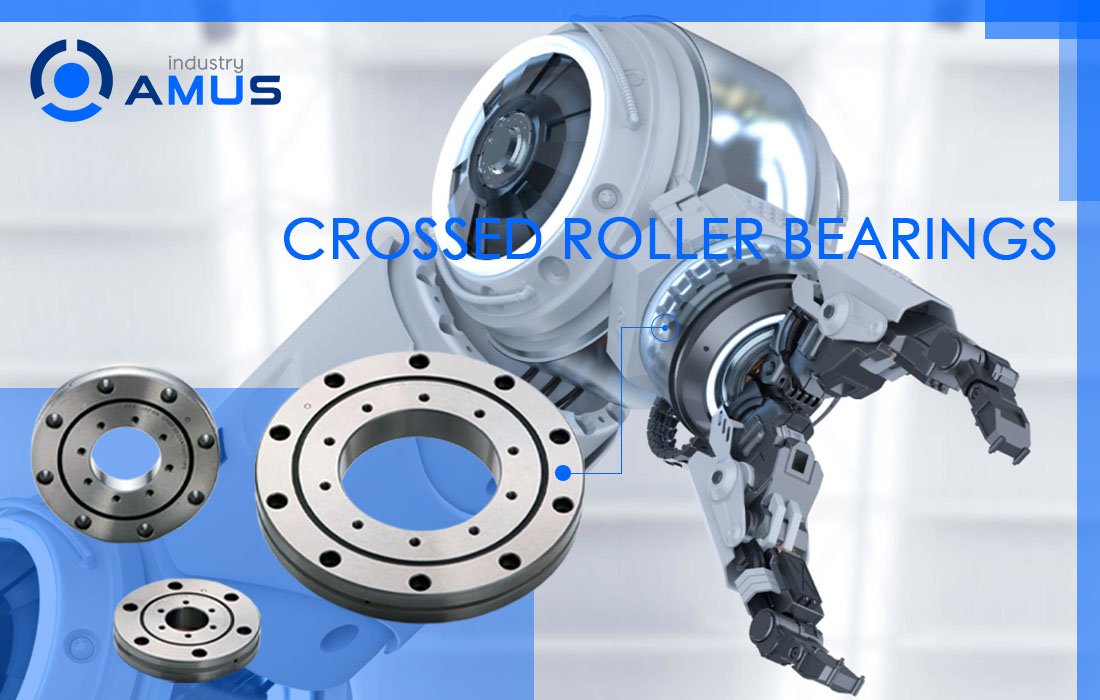
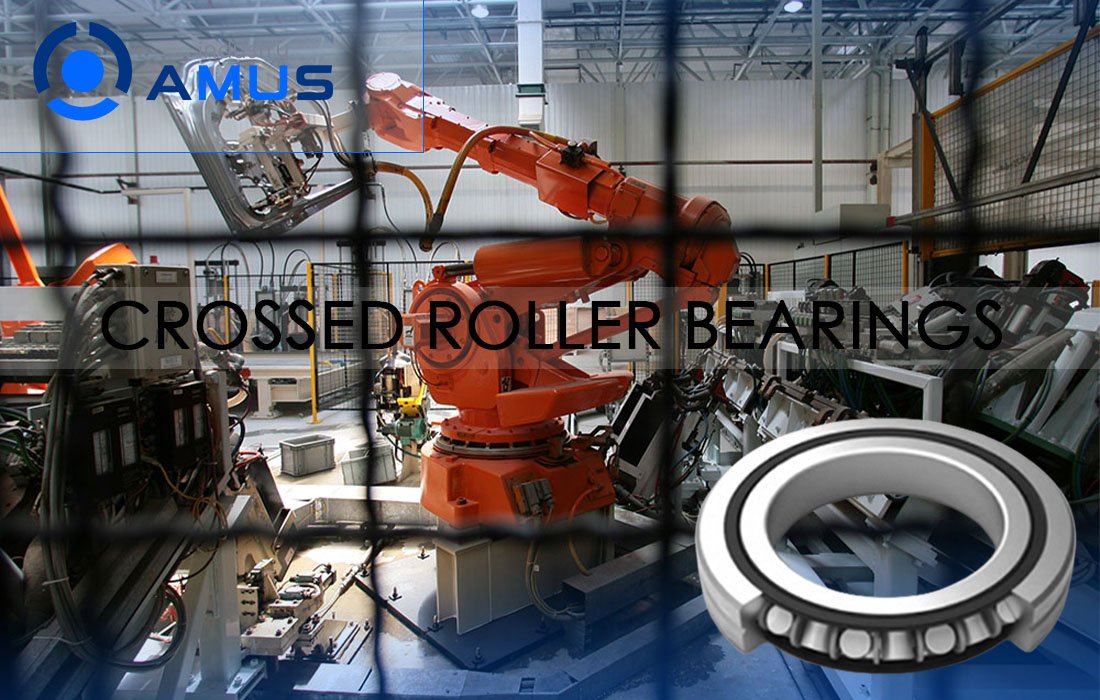
Robot bearings are critical components in robotic joints and precision transmission systems. As industrial robots, collaborative robots, and automation equipment continue to evolve, there is an increasing demand for bearings that offer lightweight construction, high load-carrying capacity, and superior rotational precision. Thin-walled roller bearings, characterized by their compact structure and efficient use of space, have become a preferred choice for the design of precision robotic joints.
I. What are thin-walled roller bearings for robots?
Thin-walled roller bearings for robots feature relatively thin inner and outer rings and transmit loads via rolling elements. Compared to some traditional thick-walled bearings, this thin-walled design reduces radial space requirements, thereby freeing up more room for internal components such as motors, speed reducers, and transmission assemblies.
Depending on their internal structure, thin-walled roller bearings can utilize various roller arrangements. Thin-walled cylindrical roller bearings are primarily suited for radial load applications, whereas thin-walled crossed roller bearings—featuring a crossed roller arrangement—can simultaneously withstand radial loads, axial loads, and overturning moments. Consequently, the appropriate bearing type must be selected based on the specific joint structure.
II. Applications of thin-walled roller bearings in robots
1. Robot shoulder joints
Shoulder joints must support the upper arm and the end-effector load, as well as withstand moments generated during movement. Selecting the right thin-walled roller bearing allows for an optimized internal joint layout. However, designers must also determine bearing dimensions based on actual load, moment, and rigidity requirements.
2. Robot elbow joints
Elbow joints are responsible for adjusting the extension angle of the robotic arm. Compact bearings enable designers to utilize internal joint space efficiently and reserve installation room for speed reducers and transmission components. Additionally, selection criteria should account for the impact of frequent start-stop cycles, reversals, and dynamic loads on bearing service life.
3. Robot wrist joints
Wrist joints typically have limited installation space and require precise rotational capabilities. Thin-walled roller bearings facilitate compact designs, while crossed-roller configurations can support loads from multiple directions; they are therefore suitable for use in precision rotating mechanisms that meet specific load requirements.
4. Robot End-Effector Rotating Mechanisms
Some robotic end-effectors require the rotation of grippers, inspection tools, or processing units. Designers can select appropriate thin-walled roller bearings based on tool weight, eccentricity, and rotational precision to provide stable rotational support for the end-effector mechanism.
III. Key Advantages of Thin-Walled Roller Bearings for Robots
Compact Structure: The thin-walled design reduces the space occupied by the assembly, helping to optimize the robot’s joint layout and freeing up installation space for other components.
Supports Lightweight Design: An optimized bearing structure helps control the weight of joint assemblies. However, the actual weight-reduction effect depends on bearing dimensions, materials, and the overall structure.
Meets Precision Rotation Requirements: Bearing precision, internal clearance, preload methods, and installation quality all influence rotational performance. Designers must make selections based on the robot’s positioning requirements.
Adapts to Various Load Conditions: Different roller configurations offer distinct load-bearing characteristics. By matching the bearing to load directions and operating conditions, designers can improve the compatibility between the bearing and the robot joint.
IV. How to Select Thin-Walled Roller Bearings for Robots?
First, verify the inner diameter, outer diameter, width, and available installation space to ensure the bearing fits correctly with the joint housing, rotating shaft, and speed reducer.
Second, analyze radial loads, axial loads, and overturning moments. For robots with long reaches, the end-effector load and the length of the moment arm significantly affect the forces acting on the joint; therefore, load-bearing capacity cannot be determined solely by the bearing’s external dimensions.
Additionally, consider rotational speed, operating temperature, lubrication methods, and service life. For high-precision robots, focus on bearing accuracy and preload parameters; for equipment involving frequent start-stop cycles, prioritize lubrication conditions, temperature rise, and fatigue life. Finally, installers must control the flatness of the mounting surface, fit tolerances, and bolt tightening force to prevent deformation of the bearing rings, which could impair bearing operation.
V. Maintenance Methods for Robot Thin-Walled Roller Bearings
Routine maintenance should focus on monitoring for abnormal noise, temperature rise, rotational resistance, and lubrication status. Operators need to establish inspection schedules based on actual operating conditions and promptly remove any contaminants that may have entered the bearing.
Additionally, properly controlling installation precision and tightening force helps maintain the bearing’s rotational performance. For robots subject to continuous long-term operation or impact loads, the operational status of the joints should be inspected regularly, and any anomalies addressed promptly.
VI. Conclusion
Robot thin-walled roller bearings offer diverse support solutions for compact joints and precision rotating mechanisms. By appropriately selecting bearing types, sizes, load capacities, and installation methods, designers can optimize internal robot space while balancing lightweight design, operational precision, and structural rigidity.